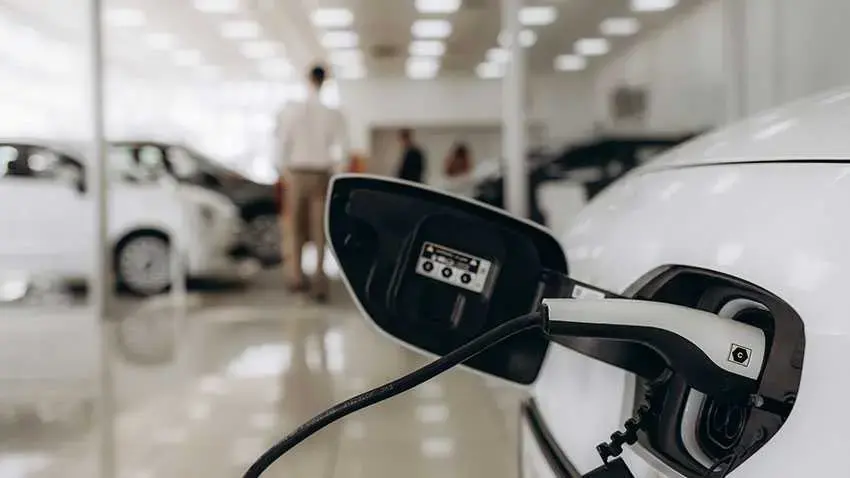
The timetable may be tweaked and revised by assorted politicians, but there's little doubt that the transition to fully electric vehicles (EVs) will happen in the next few years. At the moment, however, internal combustion engine (ICE) vehicles still make up the overwhelming majority of cars on UK roads.
At the end of April 2026, there were over two million battery (fully electric, not hybrid) electric cars on UK roads. That's a huge number, but still only around 6% of the 34 million or so cars on the country's roads. In other words, there are still millions of us who are yet to buy our first EV.
What follows will hopefully answer some of the questions we EV-newbies are asking, and those we should be asking. Electric cars are very different from ICE cars. If we're going to have to buy them, ignorance is not a great place from which to spend tens of thousands of British pounds.
Why should you buy an EV?
Well, the long-term survival of our species and our ecosphere seems like a pretty good reason. If you were thinking more about the next few years, then the main reason is because the government intends to ban sales of new petrol and diesel cars in 2035, and sales of new hybrid electric vehicles are set to be stopped in 2035. At some point, if we want new cars, our choices are going to be limited to electric or hydrogen cell.
What types of electric cars are available?
Let's sum up the different types of reduced-emission cars available.
Battery electric vehicle (BEV)
Powered by a rechargeable battery. BEVs are effectively automatics and do not require clutches or gearsticks. Early models had limited range, but an increasing number of BEVs can go 400 miles or more on a full charge.
Pros
- Good (and constantly increasing) range.
- Good reliability.
- Low running costs.
- Zero emissions.
- Will not be banned under current plans.
- Quiet.
- Possibility of tax advantages, grants and incentives.
- No more clutches and gear changes.
Cons
- Still relatively expensive to buy new.
- Charging takes much longer than filling a petrol or diesel tank.
- Towing ability may be limited.
Plug-in hybrid electric vehicle (PHEV)
Primarily powered by an ICE engine but an electric motor can drive the car for a limited distance. Battery charges by plugging into a charger.
Pros
- Lower emissions than ICE cars.
- Can use the electric motor for short-distance trips.
Cons
- Very limited range on electric motor.
- New sales will be banned from 2035.
Hybrid electric vehicle (HEV)
Primarily powered by an ICE engine. Doesn't plug in to charge: electric power for the battery is generated by the ICE engine and/or by energy released in braking. Smaller battery than PHEV.
Pros
- Good urban fuel efficiency.
- Not as pricey to buy as BEV, PHEV or FCEV.
Cons
- Cannot run any significant distance on just the electric motor.
- New sales will be banned from 2035.
Hydrogen fuel cell vehicle (FCEV)
Hydrogen fuel is combined with oxygen to generate electricity to drive the car's electric motor.
Pros
- Good range.
- Quick to refuel.
- No harmful tailpipe emissions.
- Will not be banned under current plans.
Cons
- Uncommon.
- Expensive technology, so high prices.
- Very few refueling stations compared to BEV.
The term "electric vehicle" is often used as an umbrella label meaning any of the types in the table above. Note: There are also mild hybrid electric vehicles (MHEV) and range-extended electric vehicles (RE-EV). These are outside the scope of this article as they are primarily powered by petroleum fuels and the electric aspect is relatively insignificant compared to BEVs, PHEVs and FCEVs. Like all hybrids, new MHEV and RE-EV sales will be banned after 2035.
So, out of all the variants listed above, current plans mean that only fully electric BEVs and hydrogen fuel cell cars will be sold new in the UK after 2035.
Cost
Are EVs expensive to buy?
BEVs are more expensive than comparable ICE cars, but they are getting more affordable. The average price of a new electric car in the UK is around £40k and, as with petrol cars, where luxury and performance cars are concerned, the sky's the limit. On the other hand, the cheapest EVs start at just over £7k. At that price, however, expectations should be carefully managed.
The Citroën Ami is one of the smallest "cars" on the road. It's tiny, just 2.41 metres long. Specifically designed for navigating busy urban streets and parking in tight spaces. Strictly speaking it's classed as a quadricycle rather than a car, but it's still a practical option for cities.
The lowest-priced electric cars you can fit a family in begin with models such as Dacia's Spring. Prices start at around £15k.
The cost of a new electric car can be mitigated by the government's Electric Car Grant. Available until 31 March 2030, the grant offers discounts of up to £3,750 on eligible models. Dacia's Spring that we mentioned above has historically been built in China, and most Chinese cars have been ineligible for the government's grant due to production processes not meeting environmental criteria.
Dacia has worked around this by offering its own discount, equivalent to that offered by the government. However, Dacia's new Spring is being manufactured in Europe, so potential buyers may want to check to see if the new version gets added to the list of candidate cars on the government's website. Alternatively, check whether Dacia's own discount applies to the new generation of Spring.
Buying used
The number of used EVs is, as one might expect, much lower than that of ICE vehicles, but the number is constantly increasing. Buying used can save a great deal of money and, in many cases, the condition of used electric cars may, mechanically and functionally, be better than that of ICE cars of the same age. EV batteries have a long life and, even after a few years of use, battery degradation may be minimal and the battery may have many years of useful service left. However, it is important to check a vehicle's battery health before buying.
There are, of course, potential disadvantages too. We mentioned the relatively limited number of used EVs on the market. It is also true that older examples suffered from limited range, with some achieving less than 150 miles on a full charge.
Here are a few of the pros and cons to consider.
Pros and cons of buying used
Pros
- Lower purchase price than new
- Used models may have more established track record than new and more reviews
- Instant availability
Cons
- Possibly limited range on older models
- Battery health may be degraded, meaning the battery may deliver reduced driving range
- Older models may be slower charging
- Expired warranty or short remaining warranty period
Are EVs expensive to run?
Even if the initial purchase is a punch in the wallet, most electric vehicles owned for a significant period should prove less expensive to run than their petrol or diesel counterparts. That said, savings depend upon common-sense practices such as charging at home during times when lower energy tariffs may apply.
Servicing and maintenance can also be considerably cheaper on many electric cars than on ICE models. Electric motors contain fewer moving parts than petrol and diesel engines. The absence of expensive parts such as gearbox, clutch, exhaust system and catalytic converter makes a big difference.
There can also be tax advantages. People with company cars can pay less Benefit in Kind tax (AKA company car tax) than drivers of petrol or diesel cars.
Charging
Unlike petrol and diesel cars, the average EV owner can "refuel" their car at home. Indeed, that's the cheapest way to charge your EV.
By taking advantage of off-peak electricity tariffs and charging overnight, the cost of filling up your EV battery is considerably less than filling the fuel tank of a gas-guzzler. Charging the car at home during the night also means that it's ready each morning with a full charge to easily see it through a day of typical driving.
Chargers are available that simply plug into a standard 13A socket, but installing a dedicated charger will charge the battery more than twice as fast.
When charging away from home, the cost is higher but, for day to day driving, the vast majority of EV owners charge at home.
The number of public charge points is still low for the number of electric vehicles projected to take to the road over the next few years, but the infrastructure is being constantly expanded, with charging points in places such as car parks and workplaces, as well as at traditional filling stations.
Developments in battery technology are constantly improving charging speed, battery longevity and cost. Issues of size and weight are also being addressed.
One thing to be aware of is that there is currently (no pun intended) no universal standard for EV charging connectors. In practical terms, most new EVs use what is called a Type 2 fast/slow charging connector, but it's wise to confirm before buying what kind of connection a car uses to charge, and its compatibility with connectors at home and at local charging stations. Mobile apps are available that show where charging stations are located, and what kind of charging connections are available.
One point worth mentioning, as most people wonder at some point, is whether it's safe to charge an EV when it's raining. Rest assured that EVs and charging stations are weather proof and made to be used in all normal conditions.
A note about range
Range was always one of the most cited issues with electric vehicles. The current generation of batteries can deliver up to 400 miles or more on a charge, and that is constantly increasing.
Rather than worrying over a factor that is quickly becoming a concern of the past, potential owners should perhaps consider how much range they actually need. The average UK car driver drives less than 20 miles a day. How often do most of us really need to cover hundreds of miles before we have a chance to refuel?
More range means a higher price in most cases. Conversely, if your driving profile resembles that of the average Brit, you can save a lot of money for settling for a car with a smaller range per charge. After all, you're probably never going to need 300 or 400 miles anyway.
On balance
Few people like being told what to do, and many of Britain's drivers feel, or will feel, some resentment at having their future car-buying options limited by the government. However, electric cars are becoming increasingly popular and the arguments against them are sounding increasingly laboured and outdated.
Looking at the information available, it really seems that there are fewer and fewer reasons to fear the transition to a life of quieter streets, cleaner air, cleaner buildings, and a step towards repairing, or at least limiting, the damage fossil fuels do to our world.


