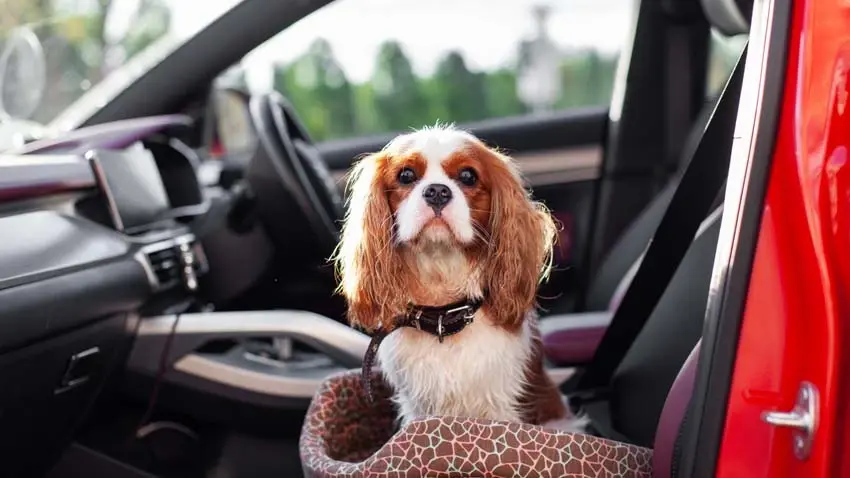
While Britain's weather has traditionally been reluctant to cooperate with TV weather presenters' forecasts (looking at you, Michael "No Hurricane" Fish), the overall trend is of increasing temperatures and more frequent extreme weather events. The heatwave in June 2026 set new high-temperature records for much of the UK, and saw both humans and animals struggling to cope with the heat. There's little doubt that the UK is getting warmer.
Stating the obvious: cars get hot
Cars can be like mini mobile greenhouses. Sun blazing through your car's windows will very quickly heat up the air inside as well as interior surfaces. The inside of a car on a hot summer's day can be intolerable for humans, and even more so for dogs. Fortunately, these days, we have air conditioning in our cars, even if we rarely have it in our houses.
However, air conditioning technology has limitations: it cannot instantly cool a hot car interior. It can take from 30 seconds to five minutes for it to start working to reduce the temperature. It takes even longer for hot interior surfaces to cool down.
Cars with a lot of plastic and metal surfaces can present real danger of burns to exposed skin. Fabric upholstery is less of a problem, but leather or plastic seats get extremely hot, as do steering wheels, armrests, seatbelt buckles etc.
Dogs in cars also get hot
It's best not to leave a dog in a car alone in any weather. Doing so can raise issues from separation anxiety to injury or worse. Leaving a dog alone in a car during very hot or cold weather is cruel and dangerous.
During hot weather, the inside of a car can reach temperatures in excess of 50° Celsius (122° Fahrenheit). At this level, the heat can present a risk to the lives of humans or animals in the vehicle. There is also a serious risk of burns from touching hot interior and exterior surfaces, which can reach 93° Celsius (200° Fahrenheit).
Animals die in hot cars.
Taking animals in cars during hot weather
Most competent, responsible pet owners know how to look after their animals when it's hot. Simple things like ensuring access to fresh water, providing shade, not walking dogs on hot pavements or over-exercising them in very hot weather ... It's all just common sense. But too many people who attend to all those details at home seem to forget the basics when taking animals in their cars.
During extreme weather, the best place for a dog is at home. If taking animals in the car is unavoidable, then prepare for the journey and any delays.
- Take water for your dog.
- Restrain your dog in the car to prevent it from hurting itself or distracting the driver (Highway Code Rule 57). Failing to restrain your dog appropriately in the car can potentially lead to a prosecution for dangerous driving.
- Ensure that surfaces your dog may touch are not too hot.
- Fit shades to windows where appropriate.
- Make regular stops so your dog can have water and bathroom breaks.
- Be alert for signs of distress or heat exhaustion/heatstroke in your dog. Symptoms may include:
- Collapse or fatigue/tiredness
- excessive panting
- drooling
- raised heart rate
- vomiting or diarrhoea
What to do if you see a dog shut in a car on a hot day
If you see a dog confined in a car on a hot day, look closely and assess the animal's condition. If the dog displays any signs of heatstroke (see above) or distress you should do the following:
- Call 999 and ask for the police. Describe the situation and the animal's condition. The police will advise you about what to do. Both the RSPCA and the police say to call 999 if you see a distressed dog in a hot car, so you may be confident that using the emergency number is appropriate.
- See if you can locate the car's driver/the dog's owner.
- If you are at a location such as a car park, consider asking the staff of the premises that operates the car park to put out a call asking the driver to return to their vehicle.
Forcing entry to a vehicle to rescue a dog
Social media is full of stories of heroes breaking car windows to free overheating dogs. This may indeed prove necessary, but it is not something that should be done casually or recklessly. The law does not specifically allow someone to damage a car in order to rescue a dog. However, the law does have an offence of criminal damage with which you may be charged if it is deemed that you broke into a car without justification or mitigation.
If you feel that it is absolutely necessary to, for example, break a window to gain entry to a car in order to rescue a dog, take steps to protect yourself from prosecution.
- Consult the police for advice.
- Take photographs and videos of the car and the endangered dog inside it.
- Specifically ask someone to witness or record both the dog's situation and the action you take. Take the contact details of witnesses.
If the police advise that it may be appropriate or acceptable to force entry to the car, take steps to protect yourself and the dog from injury when breaking a window.
- Don't break a window right next to the dog to avoid scaring or injuring it.
- Consider covering or wrapping your hand in a cloth or garment, even if using a tool or rock to break the glass.
- Cover your eyes when breaking glass.
- Don't try to pull the dog out through a broken window. Open the door instead.
If the police advise against breaking the window, be aware that going ahead and doing so may result in a prosecution for criminal damage.
Pet mode
Another thing to be aware of before considering forcing entry to a vehicle is that some cars, notably an increasing number of electric vehicles, have dedicated "dog modes" or "pet modes" (other terms are also used, depending on the manufacturer). These are special settings that regulate the car's interior climate to keep it within safe parameters for a pet that may be left in the car for a short while.
If a pet mode is active, the car's ICE/information screen will probably, but not always, display a message saying that a pet mode is in operation. The driver may also display a note on the car's dashboard or in a window informing the reader that a pet mode is in operation. Breaking the window of a car with a pet mode in operation would be tricky to explain to the car's owner and the police.
Cars with a pet mode
A number of car brands available in the UK, or soon to be introduced to the UK, offer pet modes (by one name or another) in certain models. These include the following:
- Tesla was the pioneer of dog mode in cars and they call their system. Tesla's system, actually called Dog Mode, locks the car's doors, maintains the interior climate and displays an on-screen message saying "My owner will be back soon. Don't worry!"
- Kia has a Pet Mode that maintains the interior climate and locks the doors.
- Rivian has a Pet Mode incorporated into their climate control system, meaning pets can be safely left in the car.
- Polestar has Cyberdog Mode in certain models. This maintains a suitable climate for a dog left in that vehicle.
- Lucid offers what they call Creature Comfort Mode on their vehicles to maintain safe conditions for creatures left in the car.
- Jaecoo and Omoda cars made by China's Chery International offer some models with dedicated Pet Modes that maintain suitable conditions for pets. Like Tesla, these brands display an onscreen message to inform people that the mode is active.
- Some Volkswagen and Skoda have a Parking Climate or Camp Mode that allows the cabin temperature to be controlled while the driver is away from the car.


