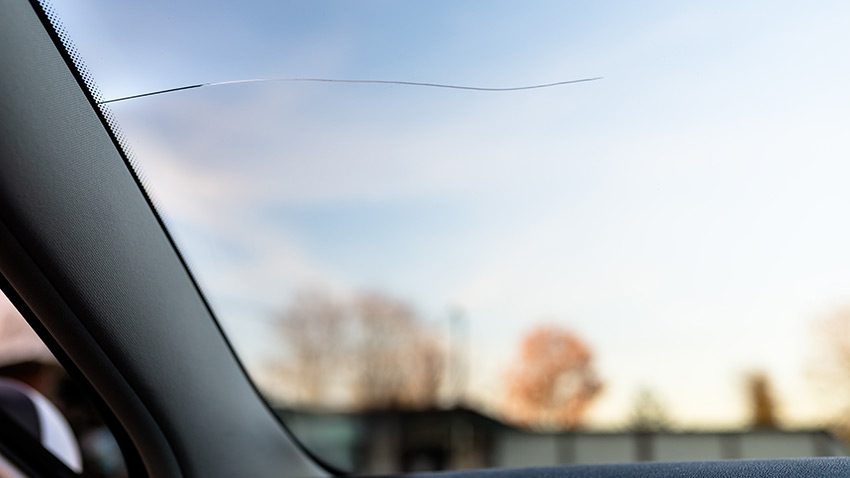
How many of us haven't winced at the sound of a stone or other object hitting our windscreens? After all, a big piece of glass right in front of one's face is definitely not something to be ignored, especially when stuff is bouncing off it. However, there is sometimes more to worry about than just the sound.
At certain times, our windscreens are particularly vulnerable to damage. During autumn and winter, sudden changes in temperature, extra debris on the roads after storms and unwise methods of de-icing frozen windscreens are all likely to end up damaging that big piece of glass.
Similarly, when your local authority has finally got around to that bit of road resurfacing you've been complaining about, the fresh layer of loose stone chips seems almost magically attracted to your windscreen.
Visibility and the MOT
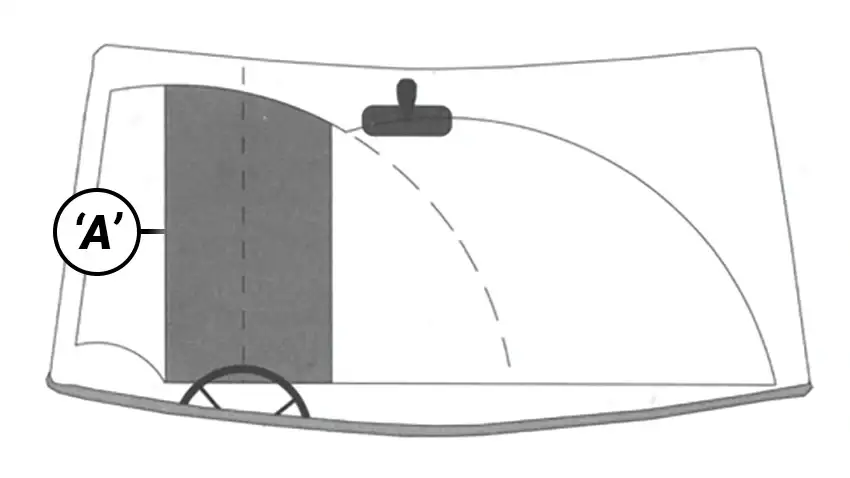
The condition of windscreens comes under the heading 'Visibility' in the MOT test. For test purposes, windscreens are divided into zones.
The most important zone, Zone A, is described by the government's MOT Inspection Manual as being;
- in the swept area of the windscreen
- 290mm wide
- centred on the steering wheel
Is minor damage a problem?
We should point out that even small chips and cracks can become very big ones in an instant. Your humble blogger has personally had a slightly chipped windscreen suddenly crack from top to bottom after driving over a speed bump. It's best to fix the small things before they become alarmingly big things.
Where the MOT test is concerned, the principle set out in the government guidance is that damage should only cause test failure if the driver's view of the road is significantly impaired:
You should only fail the windscreen if the view is significantly affected. If only the driver’s view of the sky or the bonnet is affected, it should not be rejected.
[...
Share this...


