21st century lifestyles can be hazardous to our wellbeing. We eat too much of the wrong stuff and too little of what we're told is the right stuff. We drink too much alcohol and not enough water. We use our cars too much and our feet too little. Overuse or misuse of phones and social media can adversely affect our mental health.
While some of us may try to modify our diets, get more exercise and even take out gym membership, demands on our time sometimes compel us to cut corners and compromise. The way we use our cars doesn't help: it's so much easier to slide into the driver's seat rather than take the 10 minutes to walk to the shops and another 10 minutes to walk back.
Our cars and our health interact in many ways that we probably don't often consider. Let's take a look at a few of them.
The Sedentary Aspect
We are told that sitting for prolonged periods of time is bad for us. It slows metabolism, thus promoting weight gain; it impacts the body's ability to effectively process and regulate blood sugar; it may contribute to the atrophy of muscles and bone mass. An inactive lifestyle has been linked to obesity, type 2 diabetes, some types of cancer, and early death (according to the NHS website).
According to the Office of National Statistics, people who drive more than 30 minutes each way to work and back report higher levels of stress and anxiety. For professional drivers, who may be behind the wheel for most of eight hours a day, the mental toll can be serious. Multiple studies have shown that the incidence of obesity, high blood pressure and heart disease amongst lorry, van, taxi and bus drivers is way above average.
For many working people, a walk to the shops or the post box etc may be one of the few breaks they get from sitting at a computer. In those environments standing or variable height desks offer a partial remedy to the problem; however, people who drive for a living do not have the option of standing, so making shorter journeys on foot can be important for countering the ill effects of a necessarily sedentary lifestyle.
For health, both physical and mental, walk more and drive less whenever possible.
An Awkward Position
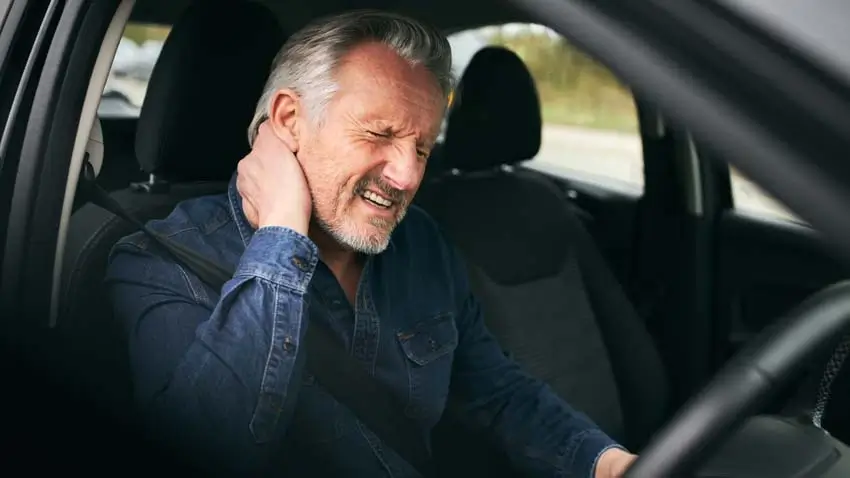
Another problem for many drivers is their posture behind the wheel. Where possible, seats, steering wheel and mirrors should all be adjusted so they work together to allow a comfortable driving position.
Seats should be adjusted before mirrors. They should recline just enough to allow the driver to relax rather than sit bolt-upright or hunched over the steering wheel. It should be possible to reach and operate the steering wheel without stretching and without having to fully extend the arms at the elbow. The arms should be able to flex and bend while still ensuring that the position is comfortable and not cramped.
Similarly, seat position should allow the legs and feet to work the pedals easily without over-stretching or cramping.
Mirrors should be set so the driver can see them clearly and easily by just turning their head. There should be no need to alter one's seated posture in order to use the mirrors.
Check your driving position to ensure your driving is free of strain and awkwardness.
Stress and its Consequences
Driving can put quite a strain on our mental states too. While driving, we can experience stress from many causes: traffic jams when we're in a hurry, other people's driving, potholes, the sudden or urgent need for a bathroom, difficulty finding a parking space and more.
Once again, some professional drivers can be hardest hit. Delivery drivers face pressures over numbers of deliveries to be made, long distance truck drivers may suffer ill effects from prolonged periods of isolation.
Recognising Symptoms of Stress
The NHS website lists the following symptoms that can indicate that someone is suffering from the effects of stress.
Physical symptoms
- headaches or dizziness
- muscle tension or pain
- stomach problems
- chest pain or a faster heartbeat
- sexual problems
Mental symptoms
- difficulty concentrating
- struggling to make decisions
- feeling overwhelmed
- constantly worrying
- being forgetful
Changes in behaviour
- being irritable and snappy
- sleeping too much or too little
- eating too much or too little
- avoiding certain places or people
- drinking or smoking more
Stress is also known to contribute to anxiety and depression.
If you suspect you may be suffering from stress, anxiety or depression see your GP: he or she can refer you to an appropriate specialist service to help.
Safety
Driving comes with many inherent potential safety hazards. A glance at almost any set of traffic accident statistics will show the potential for accident and injury. In many cases, accidents are wholly or partly attributable to one of the following:
Distractions
The highway is a complex and challenging environment. Drivers are required to multitask, maintaining focus on other vehicles, road signs and markings, pedestrians, unexpected features such as roadworks and a range of other potential obstacles and hazards. A brief distraction can be enough to cause an accident. Common distractions include:
- mobile devices, such as phones or tablets;
- in-car entertainment, such as radios and music players. Adjusting ICE and even satnav may mean that the driver has to take their attention away from the road ahead;
- food and drink, especially if dropped or spilled;
- other occupants of the vehicle. Children fighting, arguing or moving around in the rear seats are a common distraction;
- unsecured pets. Dogs should be restrained or confined to prevent them from distracting the driver.
Tiredness
A notorious cause of serious accidents, tiredness and fatigue may creep up on a driver almost unnoticed. All too often, the first indication of tiredness may be the sudden, alarming realisation that one's eyes closed and our car began drifting off its intended line of travel.
At the first sign of serious tiredness, drowsiness or loss of concentration or focus, drivers should take a break.
Long, monotonous stretches of road, such as motorways, may exacerbate drowsiness, and poor ventilation may allow carbon dioxide to build up inside the car, which can also cause drowsiness and loss of focus.
To reduce the risk of tiredness and fatigue, ensure good airflow and ventilation inside the car, and break long, boring journeys into shorter stages.
Haste
Watches may not be worn as much now as they were in previous decades, but we are still obsessed with timing and clock watching. Our portable, personal timepieces have not disappeared; they have just migrated from our wrists to our phones. We still check the time constantly. Whether it's the start of the working day, a date, a doctor's appointment, the school-run or a list of scheduled deliveries to make, we all have something we daren't be late for.
When we're pressed for time, routine and familiar things become part of a conspiracy to delay us. Traffic queues, traffic lights, other drivers … they're all deliberately, maliciously trying to make us late. We get stressed and irritable, we rush and cut corners - both figurative and literal.
Rushing may lead us to ignore road signs and traffic lights. We may try to race the change of the traffic lights; we may disregard stop and give way signs; we may break the speed limit. It is very likely our awareness of hazards such as pedestrians or other vehicles will be compromised.
Allow more time for a calm journey. Get up earlier, don't make appointments at times that are unrealistically close together, allow for the possibility of overruns and delays. Don't put yourself in a position where you have to risk your safety and that of other people by rushing around in a car.
The Safe Driving Lifestyle
Once we recognise the challenges driving can represent to our wellbeing, we can take steps to mitigate those issues. Here are a few things to think about.
- Exercise is key to offsetting the effects of sitting behind the steering wheel for prolonged periods.
- By ensuring that our cars are set up for our comfort, we can reduce strain on our necks, backs, eyes and limbs. Remember that seats, mirrors and even steering wheels are often adjustable.
- Awareness of stress is the first step towards reducing it. Remember that getting worked up will not change a situation. That traffic light will still be red; that queue of cars won't move any faster. Make a conscious effort to control your breathing, relax and be calm.
- Concentrate on your driving and minimise distractions. Don't eat or drink while the vehicle is moving. Don't be tempted to answer your phone unless it is specifically set up for easy hands-free use in a car.
- Recognise when you're too tired to drive safely. Tiredness kills. If it strikes when you've already set off, then take refreshment and rest breaks.
Stay well and drive safely.


