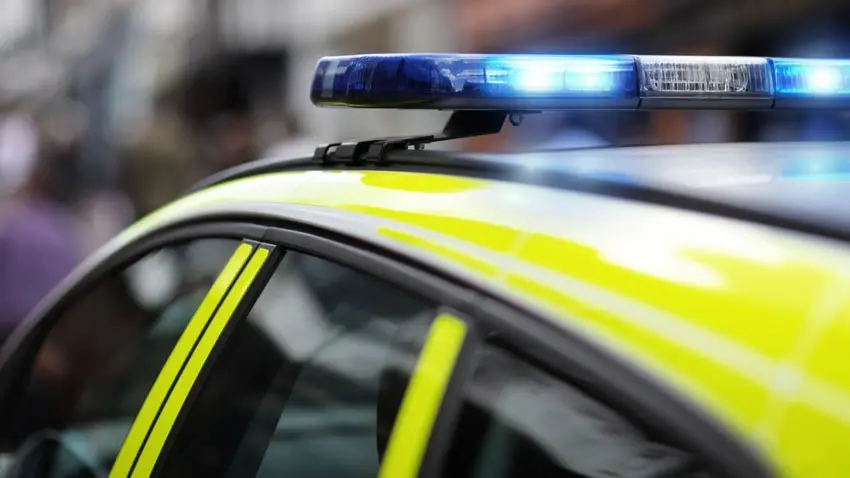
Police forces across the UK have launched their annual Christmas and New Year campaigns targeting drink and drug driving. The various forces are operating together as part of Operation Limit, a nationwide initiative that is running from 1 December 2025 until 1 January 2026. Constabularies have implemented additional patrols and briefed officers to be vigilant for possible signs of drivers being impaired by the use of alcoholic drink or drugs.
Greater Manchester Police's Chief Inspector Michael Parker said, “We have a zero-tolerance approach to drink and drug driving and over the festive period we are focusing our efforts on tackling this issue."
Sussex Chief Constable Jo Shiner, roads policing lead for the National Police Chiefs' Council, said, "Every year, we see a number of innocent people killed or seriously injured on our roads by drivers who are high on drink or drugs, and it needs to stop."
Video
As part of their campaign, Durham Police have released a video compilation of just a few of the arrests they have made for drink or drug driving.
In one clip, a driver arrested in Durham city centre had been transporting a group of children. The angry police officer can be heard saying, "You’re over twice the legal limit with a bus load of kids!"
A spokesman for the Durham force said, "Excuses, apologies, and angry slurring of words follow [arrests], but there simply is no justification for driving under the influence."
Extra vigilance: extra checks
North Yorkshire Police said, "Officers will intercept those choosing to drink or drug drive. Marked and unmarked vehicles, along with roadside checkpoints, will be deployed to test as many drivers as possible."
Lancashire Constabulary has also announced extra road policing patrols, saying that officers will be out until the New Year, stopping drivers at checkpoints and targeting people where intelligence suggests they may be drink or drug-driving.
The legal limits
For reference, we include a table of the UK's legal limits on the amount of alcohol permissible in tests conducted upon drivers.
UK alcohol limits for drivers
| Level of alcohol | England, Wales and Northern Ireland | Scotland |
|---|---|---|
| Micrograms per 100 millilitres of breath | 35 | 22 |
| Micrograms per 100 millilitres of blood | 80 | 50 |
| Micrograms per 100 millilitres of urine | 107 | 67 |
World Health Organisation data indicates that drivers with 20-50 milligrams of alcohol per 100 millilitres of blood are three times more likely to die in a traffic accident than drivers who have not consumed alcohol at all. For additional context, that range of 20-50 milligrams per 100 millilitres of blood is substantially lower than the legal limits in England, Wales and Northern Ireland, as may be seen from the table above.
How much can one drink and stay safely under the limit?
At the risk of dampening the Christmas spirit, we have to say that zero is the safe number of units of alcohol one can consume without risking failing a roadside alcohol test.
Anything above no alcohol at all is dependent upon too many variables to give reliable advice. The amount of consumed alcohol that will trigger a test failure may possibly vary according to:
- the individual's body mass
- the individual's metabolism
- time between drinks
- time elapsed since last drink
- other food and drink consumed
- activity during and since drinking
- the kind of alcoholic beverages consumed
- medical conditions and medication
- and more.
Penalties for drinking and driving
The government's website lists the following penalties for drink-driving offences.
Being in charge of a vehicle while above the legal limit or unfit through drink
- 3 months’ imprisonment
- up to £2,500 fine
- a possible driving ban
Driving or attempting to drive while above the legal limit or unfit through drink
- 6 months’ imprisonment
- an unlimited fine
- a ban from driving for at least 1 year (3 years if convicted twice in 10 years)
Refusing to provide a specimen of breath, blood or urine for analysis
- 6 months’ imprisonment
- an unlimited fine
- a ban from driving for at least 1 year (3 years if convicted twice in 10 years)
Causing death by careless driving when under the influence of drink
- life imprisonment
- an unlimited fine
- a ban from driving for at least 5 years
- an extended driving test before your licence is returned
In addition to penalties imposed by the courts, there are other possible or likely consequences, including:
- increased insurance costs if and when you get your licence back
- a criminal record that may disqualify you from some kinds of employment, and from travelling to some countries
- loss of employment due to a criminal record or loss of driving licence.
- significant social stigma
- financial consequences of the issues listed above
- depression and stress related conditions precipitated by the issues listed above
Drugs
Although the focus is often on alcohol abuse, Suffolk Police is supporting the Department for Transport's THINK!’ campaign in highlighting the impact drug driving can have on your night, your life and your future.
Between 2014 and 2023, there was a 70% increase in driver fatalities where drugs were a factor.
Police will be conducting roadside drug tests throughout December. Drivers are reminded that many drugs remain detectable in the body for days longer than alcohol, so one may still be legally unfit to drive several days after taking a substance. The penalties for drug driving are as severe as those for drinking and driving.
Background
Government data shows that around 300 people a year die in road accidents in which a driver is found to be over the drink-driving limit. When we add in the number of people injured, the total jumps into the thousands. In 2022, the most recent year for which detailed, compiled data seems to be readily available, the number of casualties caused by accidents in which at least one driver was over the alcohol limit was approximately 6,800.
Avoiding trouble
Ensuring that we don't inadvertently drink too much before driving is a matter of common sense. So much so that listing the obvious precautions we can take seems rather patronising, but we'll do it anyway.
- Don't drink any alcohol if you plan to drive the same day
- Pick events within walking distance of home
- Book taxis and Ubers
- In a group, take it in turns to be designated alcohol-free driver. If you have a tee-total member in your group, make it worth their while to be the regular designated driver
- Arrange to stay overnight with friends if necessary
Have a merry but safe Christmas and New Year